
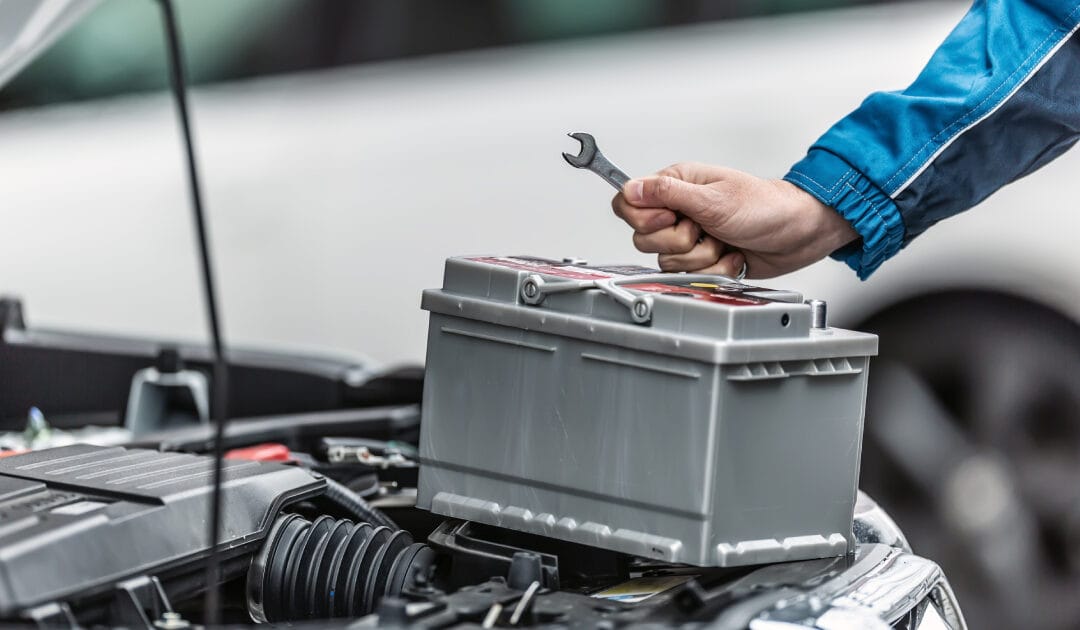
A car battery is usually reaching the end of its life when it struggles to start the engine, especially in cold weather; other signs include dimming headlights, a swollen battery case, or a battery warning light that keeps coming on. Most batteries last three to five years, so age alone is worth factoring in. If any of these sound familiar, it’s worth having it tested.
Fast Facts
- Most car batteries last between three and five years under normal driving conditions, though Ontario winters can shorten that range noticeably
- A battery that’s been jump-started more than twice in a single season is likely on its way out
- Cold temperatures reduce a battery’s cranking power by up to 35%, which is why failures tend to cluster in late fall and early winter
- Corroded terminals are one of the most commonly overlooked signs of a battery that’s been struggling for a while
- Electrical accessories (heated seats, power windows, infotainment screens) that suddenly behave sluggishly can be an early indicator before the engine itself shows any trouble
Slow Cranking Is Usually the First Real Sign
When the engine turns over slowly on a cold morning, that’s not just the weather being dramatic. Something is being communicated by the battery. Cold temperatures reduce a battery’s ability to deliver current, and a battery that’s already weakened will feel that stress first. If a vehicle takes noticeably longer to start than it used to, especially on mornings below zero, that signal is worth taking seriously. A lot of commuters in Niagara Falls chalk it up to the season and move on; sometimes that’s fine. But if it keeps happening, or gets worse as winter deepens, the battery is probably the cause.
Dimming Headlights and Sluggish Accessories
Dim headlights are one of those things that creep up gradually. Over time, the change is subtle enough that it doesn’t register until someone else points it out. But if the lights seem noticeably less bright than they used to be, or if power windows and heated seats feel slower to respond, more is being asked of the electrical system than the battery can comfortably supply. This pattern is often seen in older SUVs and work trucks that carry a lot of electrical load. Not always dramatic. But it’s consistent, and consistency is what makes it worth paying attention to.
The Battery Warning Light Isn’t Just a Suggestion
A lot of drivers see the battery light flicker and assume it’ll sort itself out. It usually won’t. That light is tied to the vehicle’s charging system, and when it comes on, something in that system is underperforming. It might be the battery, the alternator, or a connection issue; any of those left alone tends to get worse. The light being on doesn’t mean the car is about to stop immediately, but the problem is already present. Getting it diagnosed early is almost always cheaper than waiting until the vehicle won’t start at all.
Visible Corrosion on the Terminals
Battery terminals are easy to ignore because they’re out of sight under the hood. But corrosion, that white or bluish-grey buildup around the posts, is a sign that the battery has been working harder than it should, or that moisture and road salt have been doing their thing over time. Current flow gets restricted by corroded terminals, which means the battery can’t charge or discharge properly even if the battery itself is still functional. In a region like Niagara Falls, where road salt gets used heavily through the winter months, terminal corrosion tends to be noticed earlier and more aggressively than in milder climates. Interesting how that works, really.
A Swollen or Misshapen Battery Case
This one’s less common, but it matters. A battery case that looks bloated or warped has usually been exposed to excessive heat or has been overcharged at some point. It’s a physical sign that the internal chemistry has been compromised. A swollen battery should be replaced. Full stop. It’s not something that improves on its own, and in some cases it can become a safety concern. If a visual check under the hood turns up a battery that looks anything other than flat and rectangular, that’s worth flagging to a mechanic right away.
Age Alone Is a Reasonable Trigger for Testing
Batteries don’t always fail dramatically. Some just get weaker, bit by bit, until one cold morning there isn’t enough left to start the engine. If a battery is three years old or more, it’s worth having it load-tested, even if it seems to be working fine. This is especially true for out-of-warranty vehicles where the battery hasn’t been replaced since the car was new. A load test takes a few minutes; a clear picture of how much capacity is actually left gets returned pretty quickly. It’s one of those checks that tends to prevent the inconvenient kind of surprise. Anyway, that’s usually where it clicks for most people.
What Ontario Winters Do to Battery Life
Ontario winters are, to be fair, genuinely hard on batteries. The combination of cold temperatures, frequent short trips, and heavy electrical demand from heated seats, defrosters, and headlights running on long dark mornings adds up fast. A battery that might last five years in a milder climate could realistically need replacement after three in this region. Drivers in Niagara Falls who commute short distances are particularly affected, because short trips don’t always give the alternator enough time to fully recharge the battery after a cold start. Over a season or two, that deficit compounds. It’s not a flaw in the vehicle; it’s just the reality of driving here.
Getting Your Battery Checked at Hawkeyes Automotive
If any of these signs sound familiar, the straightforward move is to get the battery tested before it becomes a problem. At Hawkeyes Automotive in Niagara Falls, battery testing is handled as part of a no-pressure diagnostic process backed by Red Seal certified expertise. No hidden fees are charged, and no unnecessary upsells are made; just an honest look at what’s going on and a clear explanation of what, if anything, needs to be done. Quality work at a reasonable price is the standard here, and that applies whether a family sedan, a work truck, or an ATV is being brought in. To book a time or learn more, visit the Hawkeyes Automotive website.
Mini-FAQ
Q: How do I know if it’s the battery or the alternator causing my car problems?
Fair point, because the two get confused all the time. A battery problem usually shows up at startup; the engine cranks slowly or not at all. An alternator issue tends to appear while the vehicle is already running, often as a battery warning light or dimming gauges. Both can be tested quickly with the right equipment. That still surprises people.
Q: Can a battery fail suddenly without any warning signs?
It can, though it’s less common than people think. In most cases, the signs were there but got written off as “just the cold” or “probably nothing.” A battery that’s been borderline for a season or two is more likely to quit on a cold January morning than a warm one. Worth getting it checked before winter sets in.
Q: Is it safe to keep driving if my battery warning light comes on?
Look, it depends on what’s actually triggering it. The warning light can be set off by a weak battery, a failing alternator, or a loose connection. Driving on it isn’t recommended for long. The charging system is being flagged for a reason, and ignoring it tends to turn a simple fix into a bigger one.
Q: Does road salt affect car batteries?
Funny enough, it does, indirectly. Road salt accelerates corrosion on battery terminals and cable connections, which is a real issue for vehicles driven through Niagara Falls winters year after year. Corroded terminals reduce the flow of current and can make a decent battery perform like a weak one. Regular visual checks go a long way.