
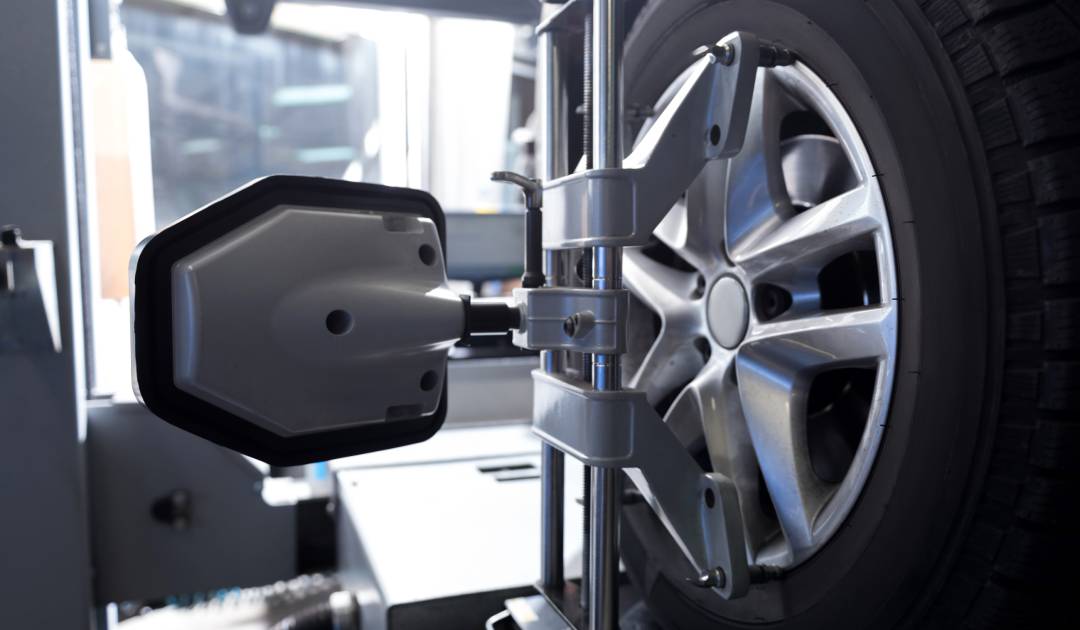
A wheel alignment is usually needed when the vehicle pulls to one side, the steering wheel sits off-centre while driving straight, or tyres are being worn unevenly. These signs can appear gradually; in many cases, they aren’t noticed until tyre wear becomes obvious. A quick inspection at a trusted local shop can confirm it.
Fast Facts
- Tyres that are out of alignment can wear out significantly faster, sometimes losing thousands of kilometres of tread life prematurely
- A single hard pothole strike is enough to knock alignment angles out of spec on most passenger vehicles
- Niagara Falls roads, especially after freeze-thaw cycles and road salt exposure, are particularly hard on suspension and alignment settings
- Wheel alignment and wheel balancing are two different services; one corrects angle, the other corrects weight distribution
- Most vehicles benefit from an alignment check at least once a year, or any time new tyres are installed
What Wheel Alignment Actually Means
Alignment refers to the angles at which tyres make contact with the road. Three main angles are involved: camber, toe, and caster. Each one affects how the vehicle tracks and handles, and how evenly the tyres are worn over time. When those angles drift outside the manufacturer’s specified range, the vehicle is considered out of alignment. That doesn’t mean the wheels are visibly crooked. In most cases, the deviation is subtle enough that it can’t be seen with the naked eye; the effects only show up gradually, in tyre wear patterns, fuel efficiency, and how the vehicle feels to drive.
The Pull: When Your Vehicle Drifts to One Side
One of the clearest signs is a pull. On a flat, straight road, a properly aligned vehicle should track forward without the wheel being fought by the driver. If there’s a constant drift to the left or right, that’s worth paying attention to. Now, a slight pull can sometimes be caused by tyre pressure differences, so that’s worth ruling out first. But if the tyres are properly inflated and the pull is still there, alignment is likely the issue. From what we’ve seen at Hawkeyes Automotive, this is often the symptom that finally brings people in, usually after weeks of quietly correcting for it without thinking much about it. Funny thing, really.
Steering Wheel That Sits Off-Centre
A crooked steering wheel is another reliable indicator. When the vehicle is going straight, the centre spoke or logo should sit level. If it’s tilted noticeably to one side, alignment is probably off. Some drivers barely register this because the adjustment gets made without thinking about it, bit by bit, until it just feels normal. But it’s the kind of thing that, once pointed out, becomes hard to ignore. A simple visual check takes about two seconds, and it’s one of the first things a Red Seal Certified technician will look at during an alignment inspection.
Uneven or Rapid Tyre Wear
Tyre wear patterns tell a story. Wear concentrated on the inner or outer edge of a tyre, rather than across the full tread surface, is commonly produced by misalignment. Camber issues, for example, tend to cause one-sided wear. Toe problems often show up as a feathered or scalloped pattern across the tread. If one tyre is being worn noticeably faster than the others, or if the wear looks uneven when you crouch down and look across the surface, an alignment check is worth getting. Replacing tyres prematurely because alignment was left unchecked is one of the more avoidable costs in vehicle ownership; that sounds obvious, but it catches a lot of people off guard.
Vibration in the Steering Wheel
Steering wheel vibration can have a few causes, and alignment is one of them. It’s not always the first culprit, since wheel balancing issues can produce a similar feeling. But if the vibration is accompanied by a pull or uneven tyre wear, alignment becomes more likely. The vibration tends to be felt at highway speeds, somewhere in the 90 to 110 km/h range for most vehicles. It can be easy to write off as road noise or a rough surface, especially on some of the older stretches of road around Niagara Falls. Worth having it looked at rather than assuming it’ll sort itself out, I suppose.
When Ontario Roads and Winters Make It Worse
Road conditions here are genuinely hard on alignment. Freeze-thaw cycles create potholes that appear quickly and run deep. Road salt, while necessary, accelerates corrosion on suspension components that affect how alignment is held over time. A vehicle that was aligned in the fall may be in a noticeably different state by spring, depending on what was hit over the winter. This is especially true for work trucks and SUVs that are driven daily through Niagara Falls and surrounding areas. Checking alignment after winter is a reasonable habit, not an upsell, and that’s usually where it clicks for people who’ve been putting it off.
Events That Should Trigger an Alignment Check
Certain events are known to affect alignment, regardless of how the vehicle feels afterward. Hitting a significant pothole or curb at speed is the most common. A minor collision, even one where no visible damage was caused, can shift suspension geometry. Installing new tyres is another good trigger point, since alignment affects how evenly those new tyres will be worn from day one. And if the vehicle has been in for suspension work, an alignment check should follow. These aren’t arbitrary recommendations; they’re based on what actually causes alignment to shift, and getting ahead of it is almost always less expensive than dealing with the wear that results from leaving it alone.
Getting It Checked Without the Dealership Markup
For drivers in Niagara Falls who are weighing their options, alignment checks and adjustments can be handled at a local independent shop at dealer-alternative rates, with upfront quotes and no unnecessary upsells. At Hawkeyes Automotive, alignment work is carried out by Red Seal Certified technicians who give a straight read on what’s needed and what isn’t. Quality work at a reasonable price is the standard here, not the exception. If any of the signs in this article sound familiar, the best next step is to have it looked at before tyre wear or handling issues get worse. Visit the Hawkeyes Automotive website to learn more or to get in touch during regular weekday business hours.
Mini-FAQ
Q: What’s the most common sign that a vehicle needs an alignment? A vehicle pulling to the left or right while driving on a flat, straight road is probably the most reported sign. It’s noticed when the steering wheel has to be held at an angle just to go straight. That kind of correction becomes second nature after a while, which is why it gets missed for so long.
Q: Does hitting a pothole actually knock alignment out? Fair point to question, because it sounds like an exaggeration. But yes, a single sharp impact, especially at speed, can shift the angles enough to cause measurable misalignment. It’s been seen plenty of times at the shop. Not every pothole does it, but the deep ones on Ontario roads in spring certainly can.
Q: Can bad alignment damage my tyres? Absolutely. Uneven tyre wear is one of the clearest signs that alignment has been off for a while. One edge of the tread gets worn down faster than the other. Tyres are a real cost, so letting alignment go unchecked tends to make that cost arrive sooner than it should.
Q: How often should alignment be checked? Once a year is a reasonable baseline for most drivers. That said, it’s also worth checking after any significant impact, after new tyres are put on, or if the vehicle has been in a minor collision. No hard rule fits every vehicle or every driver’s situation.