
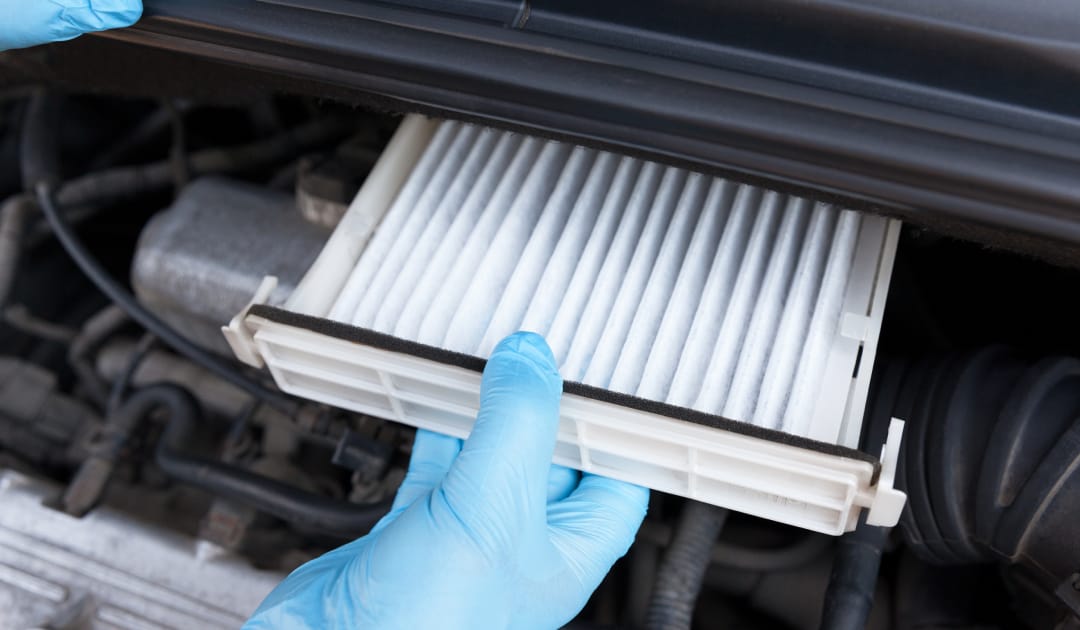
Most vehicles need a new engine air filter every 20,000 to 25,000 kilometres; but driving conditions matter just as much as distance. Heavy dust, stop-and-go traffic, or gravel roads can wear one out faster. If you’re unsure, a quick visual check at your next service appointment usually tells the story.
Fast Facts
- Engine air filters are typically recommended for replacement every 20,000 to 25,000 kilometres, though some manufacturers suggest longer intervals
- A severely clogged filter can reduce engine airflow enough to affect fuel efficiency noticeably
- Niagara Falls drivers dealing with road salt, construction dust, and winter grit may find filters wearing out sooner than the manual suggests
- Cabin air filters and engine air filters are two separate parts, each with its own replacement schedule
- Most filter checks take only a few minutes during a routine oil change or inspection
What an Engine Air Filter Actually Does
The engine air filter sits between the outside air and your engine’s intake, and its job is a fairly simple one: keeping dirt, dust, insects, and debris out of the combustion chamber. Clean air is drawn in, mixed with fuel, and the engine runs the way it’s supposed to. When that filter gets clogged, though, more effort is required from the engine just to pull in air. And over time, that extra strain starts showing up in ways you can actually feel, like sluggish acceleration or a gradual drop in fuel economy. It’s a small part doing a lot of quiet work, bit by bit, every time the engine runs. Interesting how that works.
The General Replacement Interval
Somewhere between 20,000 and 25,000 kilometres is where most manufacturers land on engine air filter replacement, though intervals as long as 40,000 kilometres are suggested for certain vehicles. That range exists because driving conditions vary so much from one situation to the next. The number printed in your owner’s manual is based on average conditions, which don’t always reflect what’s actually happening under the hood in practice. It’s a starting point, not a hard rule. Checking the filter visually at each oil change is probably the most practical approach, especially for vehicles that see a lot of varied use across different road types.
Why Niagara Falls Driving Conditions Matter
Ontario winters are hard on vehicles in ways that go well beyond the obvious. Road salt, sand, and grit are kicked up constantly from November through March, and that material doesn’t stay on the road where it belongs. Wheel wells, undercarriages, and air intakes all get exposed to it. Drivers in Niagara Falls dealing with heavy winter commutes, or working near construction zones along the QEW corridor, are often pulling more particulate through their filters than someone in a quieter environment would be. In those cases, the standard interval might be too generous; a filter that looks fine at 15,000 kilometres in one vehicle might already be overdue in another. To be fair, the manual can only account for so much.
Signs Your Filter Might Be Overdue
A few things tend to show up when a filter has been left too long. Reduced throttle response is one of them. A slight drop in fuel economy is another, though that one’s easy to miss if it happens gradually, day by day, without any obvious trigger. Some drivers notice the engine sounds different at idle, a bit rougher or more laboured than usual. In more advanced cases, a check engine light can be triggered by airflow sensors detecting restricted intake. None of these are guaranteed signs on their own, but if two or three are showing up at the same time, the filter is worth checking. Probably sooner rather than later.
The Difference Between Engine and Cabin Air Filters
These two get mixed up more often than you’d think, and that’s worth addressing directly. The engine air filter protects the engine. The cabin air filter protects the air inside the vehicle, the air that you and your passengers are actually breathing. They’re separate parts, usually found in different locations, and different replacement schedules are assigned to each. Cabin filters are often recommended every 15,000 to 25,000 kilometres, depending on the manufacturer. Both matter. But they’re not interchangeable, and replacing one doesn’t mean the other has been dealt with; worth confirming that both are on your maintenance checklist before the next service visit.
What Happens If You Skip It
Skipping an air filter replacement for a while isn’t going to blow up your engine. But the effects do build up, even if they’re not immediately obvious. More load gets placed on the intake system as airflow becomes restricted. Fuel trims can be affected as the engine compensates for the imbalance, and over a long enough stretch, contaminants can make their way past a degraded filter and into the intake manifold or further. The repair costs associated with that kind of damage are significantly higher than what a filter replacement would have run. It’s one of those maintenance items where the math is pretty straightforward. Anyway, that’s usually where it clicks for people.
How Air Filter Checks Fit Into Routine Service
Checking an air filter doesn’t require a separate appointment, and that’s genuinely good news for most drivers. At Hawkeyes Automotive, it’s the kind of thing that gets looked at during a regular oil change or inspection, without being turned into an unnecessary add-on. If the filter is fine, you’re told it’s fine. If it needs replacing, you’re shown why, and an upfront quote is given before anything is done. No hidden fees, no unnecessary upsells. That’s just how a straightforward shop operates. Quality work at a reasonable price means not padding a service visit with things that don’t need doing yet.
Getting It Checked in Niagara Falls
If your vehicle is past the 20,000-kilometre mark since the last filter replacement, or if a lot of winter driving, dusty road work, or heavy hauling around the Niagara region has been done recently, it’s worth having the filter looked at. Red Seal certified expertise, local shop trust means the inspection gets done properly, not rushed through. Hawkeyes Automotive is open Monday through Friday for scheduled service. To book a time or find out more about what’s included in a routine maintenance visit, the website can be found at hawkeyesauto.com.
Mini-FAQ
Q: How do I know if my air filter actually needs replacing?
Look at it. A new filter is usually white or off-white; a dirty one is grey, brown, or visibly clogged with debris. That said, colour alone isn’t always the full picture. Some filters look moderately dirty but are still functioning fine, while others can be compromised in ways that aren’t obvious to the eye. Getting it checked by a mechanic during a regular service is the most reliable approach. Not a bad habit to build.
Q: Can a dirty air filter actually hurt my engine?
Fair point, and yes, it can. The engine needs a consistent supply of clean air to mix with fuel properly. When that airflow is restricted, the combustion process is affected, and over time, that strain can be felt in fuel consumption and engine performance. In some cases, contaminants are pulled through a weakened filter and into the engine itself.
Q: Does the type of driving I do in Niagara Falls change how often I need a new filter?
It does. Highway commuters tend to get more kilometres out of a filter than someone driving unpaved roads, idling in heavy traffic, or working a job site where dust is constant. Tradespeople running work trucks around construction zones in the Niagara region often find their filters need attention more frequently than the owner’s manual would suggest. Worth keeping in mind.
Q: Is replacing an air filter something I can do myself?
In many cases, yes. On a lot of vehicles, the air filter housing is accessible and the swap is straightforward. But the filter type, housing design, and access point vary quite a bit depending on the make and model. If you’re not sure what you’re looking at, having it done during a scheduled service means it gets inspected properly and replaced with the right part. No guesswork involved.